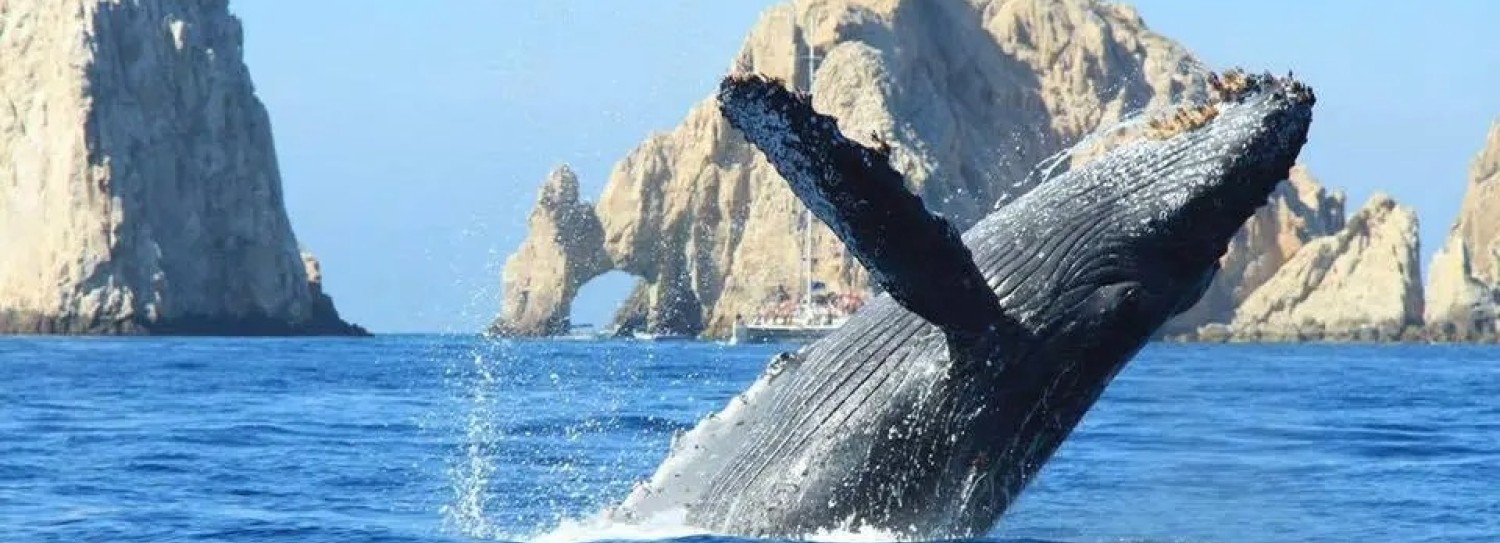
Whale Watching Season is Here! An Unforgettable Winter Experience at Quivira Los Cabos.
December 15, which marked the official start of the whale watching season in Los Cabos, gave outfitters the green light to take nature lovers out past Land’s End to see whales, the magnificent giants of the sea.
Los Cabos—particularly along the Pacific coastline near Quivira Los Cabos—the most vibrant destination in Latin America, is the beacon for the longest mammal migration on earth. Whales undertake an arduous 6,000-mile swim from the frosty waters of the Arctic Ocean to the temperate waters at the tip of the Baja Peninsula. That’s comparable to a round-trip drive between Los Angeles and New York.
Of the eight whale species that venture to Los Cabos, the most common are humpback whales, which routinely thrust themselves out of the water in fantastic, gravity-defying leaps. Their blue-black, 40-ton bodies, which can attain a length of nearly 50 feet (15 meters), are flanked by enormous pectoral fins. These maneuverable flippers, the largest appendage of any animal, are used to turn, steer, and balance. Coupled with their powerful tail flukes, these fins enable the humpbacks to surge out of the water in acrobatic breaches. (A breach is technically defined as 40% of the whale’s body clearing the water.)
Once nearly hunted to extinction but now enjoying a revival (there are an estimated 70,000 humpback whales worldwide), these majestic creatures fatten up on small fish and krill in polar waters before embarking on their epic journey to the Baja.
Warm, nutrient-rich waters, ideal salinity, and balmy weather make the bays and lagoons at the tip of the Baja Peninsula the perfect place for whales to socialize, mate, and birth their calves. Once born, these not-so-little babies need to be taught how to swim and survive in the ocean. Calves, which measure 10 to 16 feet long (3.5 to 5 meters) and weigh over a ton, stay close to their mothers for up to one year before weaning. Mothers are very protective of their calves, swimming beside them and often touching them with their flippers. Calves are a favored prey of orcas, also known as killer whales, which also inhabit the waters around Cabo.
Since mid-November, residents at Quivira Los Cabos have observed early-arriving whales spouting and breaching directly offshore. Players at Quivira Golf Club, home of a spectacular Jack Nicklaus-designed course routed along sheer granite bluffs high above the sea, have also spotted tail-slapping whales from the layout’s cliff-side tees, greens and fairways.
For visitors who want an up-close look at these awe-inspiring creatures, the Quivira concierge can provide information on the best whale watching tours departing from the Cabo San Lucas marina.
Guides often bring a hydrophone (underwater microphone), which allows participants to hear the whales “singing” in the sea. (Known for their swooning lullabies, male humpback whales are especially vocal during the mating season. It’s been theorized that the males are serenading potential female partners with their baffling medley of squeaks and groans.)
In addition, the outfitter’s knowledgeable guides share interesting facts about these splendid cetaceans, which have a life expectancy of 45 to 50 years but can live into their 80s. The experience of witnessing these sea giants at play as they spout, splash, and breach just beyond Land’s End is unforgettable.
Don’t miss this seasonal spectacle. Make a New Year’s resolution to book a whale watching cruise for January or February. Why then? Because nine out of 10 tours encounter whales during those two months.