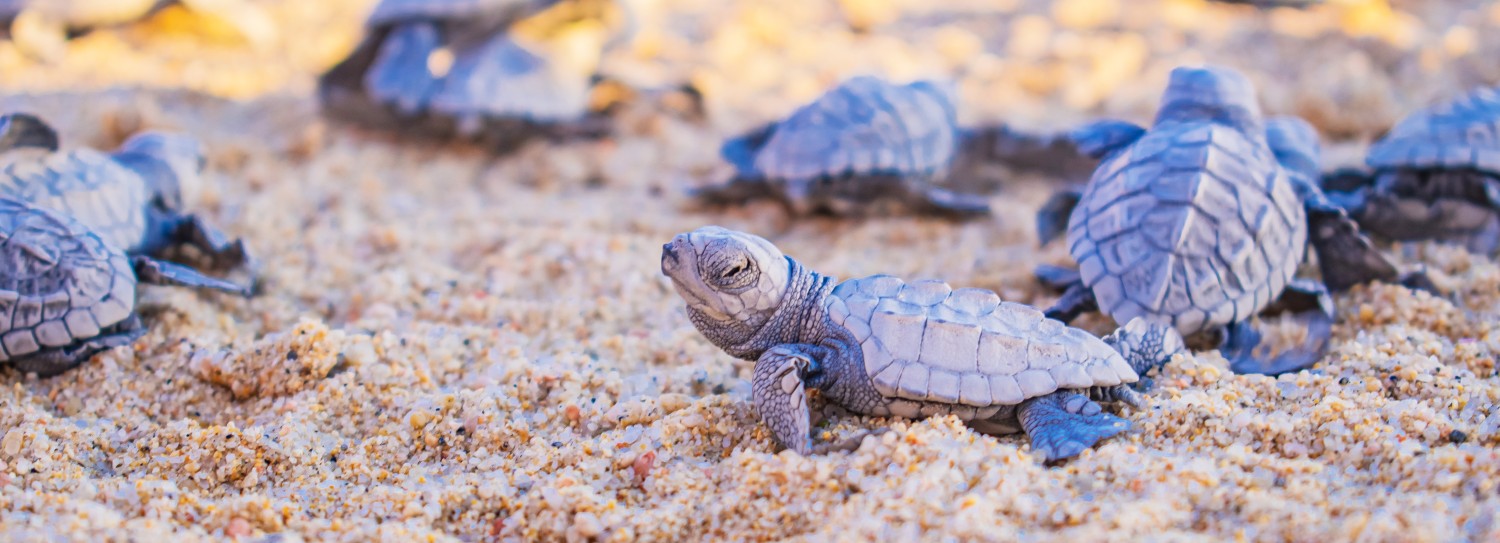
Record Number of Sea Turtle Nests Protected this Season
Pueblo Bonito Resorts has successfully managed a turtle nest protection and hatchling release program for more than 20 years. In addition to educating visitors and residents about active conservation, the goal has always been to boost the survival rate of an endangered reptile vital to the region’s ecosystem.
The hospitality company’s enduring commitment to the program and its role as an environmental custodian is paying big dividends this year.
According to Veronica Sánchez, an environmental scientist and coordinator of Grupo Pueblo Bonito’s Sea Turtle Camp, the number of nests they’ve recorded this year has increased by half compared to 2025.
“An increase of 318 nests this year is equivalent to a 53% rise,” she said. Behind these numbers is a vigilant team that walks more than 5 km. of beach day and night hoping to find a new nest to protect and later, a baby turtle to set free.
Sea turtles come ashore on the lengthy stretch of beach fronting the Pueblo Bonito Pacifica and Sunset Beach resorts; as well as Médano Beach, home to the Pueblo Bonito Los Cabos and Rosé Resorts in Cabo San Lucas.
Sánchez noted that each additional nest represents “a greater work commitment, constant effort, and improvements in the techniques for collecting and reseeding clutches, always in compliance with current regulations for the protection and management of the species. All of this work aims to favor incubation conditions and achieve the highest possible number of hatchlings which, once hatched, are released immediately into the sea.
“This nesting peak is an indicator of the intense reproductive activity during the season, but it also represents a significant challenge that requires joining efforts and maintaining constant vigilance to locate, collect, and follow up on each nest, ensuring that the eggs are incubated under the appropriate conditions,” Sánchez explained.
Several of the world’s sea turtle species live and reproduce in Los Cabos. The Sea Turtle Camp staff primarily safeguards the Olive Ridley turtle (Lepidochelys olivacea), a species that has recovered favorably worldwide and represents 99% of the nests in Los Cabos.
Once the location of the nests is recorded, they are safeguarded after the female turtles return to the sea. Fences and structures are erected to protect the nests from birds, animals and humans until the sea turtles hatch. Like clockwork, the main hatch usually starts this month and continues into October. Because the hatchlings are easy prey for natural predators, these gentle reptiles need all the help they can get to safely reach the sea, attain maturity and increase their numbers.
Sea turtles are critical to the health of beaches and marine systems in Los Cabos. If sea turtles diminish in number, both of these bionetworks will suffer. Sea turtles use beaches and dunes to nest and lay approximately 100 eggs per nest. Dune plants use the nutrients from turtle eggs to grow and become stronger. Without the turtles, dune vegetation would lose a major source of nutrients and would not be healthy or strong enough to anchor the sand. In time, beaches would erode and wash away, negatively impacting tourism.
“The participation of Grupo Pueblo Bonito goes beyond the protection of nests,” Sánchez concluded. “It is a long-term commitment to caring for the habitat, to environmental education directed at guests, owners and residents, and to the implementation of good practices within operations to favor the appropriate conditions for nesting and the birth of the hatchlings.”
Based on the numbers recorded this season, mission accomplished.