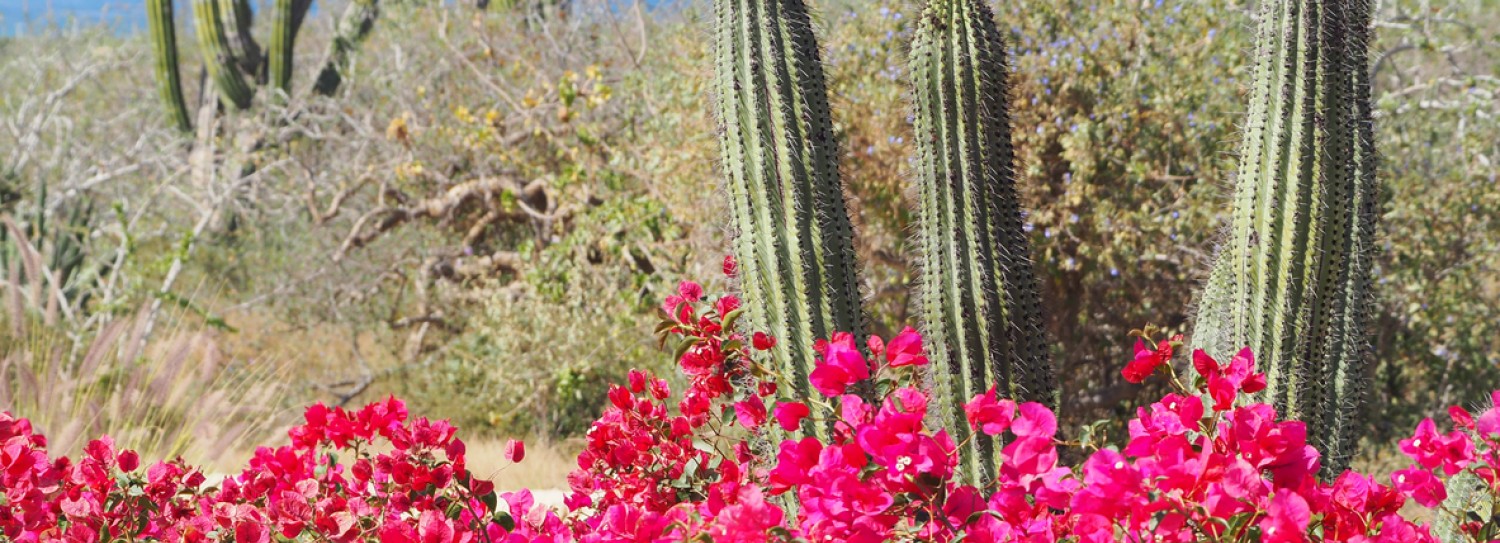
Baja Desert Blooms After Recent Rains
Baja California Sur gets less rain than any state in Mexico. But you wouldn’t know it this year.
Los Cabos was saturated with record amounts of rainfall in September and October, far exceeding the norm. The result? A completely transformed landscape. For residents of Quivira Los Cabos, the seasonal transformation offers a fresh perspective on the spectacular desert surroundings that make this coastal community so special.
Seemingly overnight, the tawny desert has turned a vibrant shade of green. A mass flowering has occurred: dormant species of wildflowers and vines have burst into bloom. Trees that dropped their leaves to conserve water during the hot summer months are now flush with new leaves. The trunks of large cacti have swelled in size, having absorbed and stored precious water for the dry months ahead. The flanks of peaks in the Sierra de la Laguna ringing Cabo have been partially obscured by lush green growth.
If you’ve ever thought about taking a desert hike, now’s the time. Whether you're exploring the natural surroundings of Quivira or venturing farther into the Los Cabos countryside, this is an ideal opportunity to appreciate the remarkable biodiversity of the Baja Peninsula.
Here’s a brief review of what to watch for.
Cacti and Succulents
- Cardón Cactus. Dominating the Baja landscape is the stately, multi-armed cardón. The tallest cactus in the world, it reaches heights exceeding 60 feet. Its weight at full maturity is nearly 25 tons. Its lifespan is measured in centuries. This giant, imposing cactus produces white, funnel-shaped blooms after seasonal rains. These flowers are pollinated at night by nectar-feeding bats and moths. They later turn into seed pods that feed birds.
- Pitaya Agria (Galloping Cactus). An erect to sprawling multi-branched cactus, the pitaya’s ribbed stems and spines yield large, fragrant purplish-white to rose-pink flowers after rain showers. Early Spanish sailors used the fruit of the pitaya to prevent scurvy during long ocean voyages.
- Pitaya Dulce (Organ Pipe Cactus). This beautiful multi-branched cactus, marked by long, brownish-black to gray spines, blooms with cream to white-colored flowers tipped with light purple. The red spiny fruits, the size of a tennis ball, ripen in late summer and early fall. They are highly prized for their flavor, akin to watermelon.
- Pitayita (Hedgehog Cactus). Following a storm, this low-growing plant produces bright red, yellow, orange or pink to magenta flowers along its spiny stems.
Trees and Woody Shrubs
- Ocotillo (Coachwhip). An unmistakable shrub with no main trunk but many long, slender whip-like branches that fan out from the base. Resembling a thicket of dry sticks during a dry spell, ocotillos burst with clusters of tubular red flowers within 72 hours of a significant rain.
- Torote Blanco (Giganta Elephant Tree). Known for its outer layer of peeling paper-like bark, this sculptural tree’s thick lower trunk resembles an elephant’s leg. There are several smaller varieties. Torotes spring to life with dark green leaves and small creamy-white flowers following moisture. Birds (especially doves) feast on its small fruit.
- Palo Adán (Adam’s Tree). A spiny, tree-like shrub that quickly responds to rain by putting out green leaves and vibrant red to orange flowers pollinated by hummingbirds. This near-endemic species grows in the clay and granite soils of Baja’s alluvial plains.
Wildflowers and Perennials
- Calliandra (Fairyduster). This low, rounded, densely branched “resurrection” shrub is represented by three species in the Baja, two of which are endemic. The California Fairyduster has deep red flower clusters that bloom almost year-round after wet cycles. There’s also a pink variety.
- Brittlebush. One of the more common desert shrubs in the Baja, brittlebush is an aromatic, gray-green bush that covers hillsides and valleys. Its bright yellow, daisy-like flowers bloom opportunistically after rains.
NOTE: One of the best apps for desert plant identification is iNaturalist. Created by the National Geographic Society and California Academy of Sciences, this AI-based app combines image recognition and GPS location data, with a community of avid naturalists to review and confirm species. The app is available on iOs and Android.
Desert Hiking Tips
Start at dawn or sunrise. Most trails have zero shade. Temperatures tend to spike by late morning.
Watch the arroyos. Heavy rains can trigger flash floods in dry riverbeds (arroyos). Wait 24 - 48 hours after a major storm before entering deep canyons.
Proper footwear. Trails have sharp rocks, loose gravel and dense thorny vegetation. Wear sturdy hiking shoes.
For Quivira residents, the desert's remarkable transformation is a reminder that some of the most rewarding experiences in Los Cabos can be found right outside your door. Take time to explore, observe the seasonal changes, and enjoy the natural beauty that makes this region such an extraordinary place to call home.